Matatu Driver Kenya: Powerful 2026 Guide to Jobs, Salary, Skills & Career Success
Matatu Driver Kenya A Matatu driver Kenya plays one of the most important roles in the country's transport sector. Every day, thousands of public service vehicles connect millions of passengers to workplaces, schools, hospitals, shopping centres, airports, and rural towns. Without skilled...
Matatu Driver Kenya: Powerful 2026 Guide to Jobs, Salary,...
SEO-friendly content designed to build trust and stronger driver discovery across Kenya.
Table of Contents
ToggleMatatu Driver Kenya
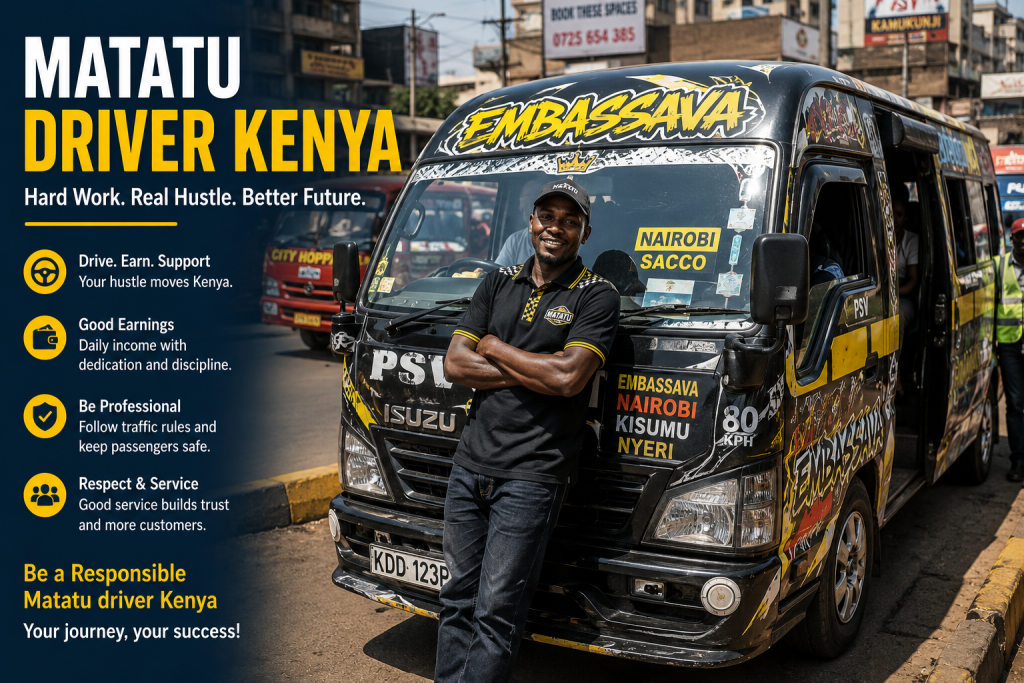
A Matatu driver Kenya plays one of the most important roles in the country’s transport sector. Every day, thousands of public service vehicles connect millions of passengers to workplaces, schools, hospitals, shopping centres, airports, and rural towns. Without skilled drivers, Kenya’s public transport system would struggle to operate efficiently. Yet despite their importance, many people have limited information about what the profession involves, the qualifications required, the daily responsibilities, career opportunities, and the technologies transforming the industry.
If you are considering becoming a Matatu driver Kenya, this guide explains everything you need to know. Whether you are a young driver entering the transport industry, a PSV owner hiring drivers, or an investor looking to modernize fleet operations, understanding the realities of the profession helps you make informed decisions.
Many websites discussing Matatu driver Kenya careers use broad statements such as “drivers earn good money” or “there are many job opportunities” without explaining the factors that determine earnings and career growth. In reality, income depends on the route, employer, work schedule, incentives, compliance with PSV regulations, and overall fleet management practices. Experienced drivers operating on organized routes with professional fleet operators often enjoy more stable working conditions than those working in poorly managed operations.
Technology is also changing the profession. Fleet owners increasingly rely on digital management platforms to monitor attendance, vehicle assignments, maintenance schedules, fuel consumption, leave management, incident reporting, payroll, and staff performance. These systems help reduce paperwork while improving accountability across transport businesses.
At KayaPro360, we help organizations digitize workforce management through modern cloud-based software. Businesses operating transport fleets, logistics companies, courier services, bus operators, construction firms, schools, and delivery companies can use KayaPro360 to simplify employee management, improve operational efficiency, and maintain accurate workforce records.
Start transforming your workforce today by visiting:
Why the Matatu Industry Remains Important in Kenya
The Matatu driver Kenya profession continues to provide employment opportunities because public transport remains the backbone of mobility across the country. Every day, passengers rely on matatus to travel between residential estates, business districts, educational institutions, healthcare facilities, industrial areas, and rural communities.
Although ride-hailing services, private vehicles, and corporate transport continue to grow, matatus remain the most accessible transport option for millions of Kenyans because they serve both urban and rural routes at relatively affordable fares.
The industry also supports thousands of indirect jobs. Mechanics, conductors, cleaners, vehicle inspectors, tyre suppliers, fuel stations, insurance providers, financiers, spare parts dealers, and technology companies all benefit from the continued operation of Kenya’s public transport sector.
As urban populations expand and new residential developments emerge, demand for organized public transport continues growing. This creates ongoing opportunities for qualified drivers who demonstrate professionalism, customer service, and safe driving practices.
What Does a Matatu Driver Kenya Do?
Many people assume a Matatu driver Kenya simply drives passengers from one location to another. In reality, the responsibilities are much broader.
A professional driver begins each day by inspecting the assigned vehicle. This includes checking tyre condition, brakes, lights, mirrors, indicators, engine fluids, fuel levels, and general roadworthiness. Identifying mechanical issues before leaving the parking yard reduces the likelihood of breakdowns or accidents during operations.
Drivers are also responsible for following approved routes while complying with traffic regulations, PSV licensing requirements, and company policies. Maintaining punctuality helps operators build customer trust, particularly for commuters who rely on predictable transport schedules.
Customer service has become increasingly important within the transport industry. Professional drivers communicate respectfully with passengers, assist elderly or disabled travelers where appropriate, and maintain calm during challenging situations such as heavy traffic or unexpected delays.
Accurate reporting is another responsibility. Drivers frequently communicate vehicle faults, accidents, incidents, fuel usage, maintenance needs, and operational concerns to supervisors. Organizations using digital workforce management software streamline this process by allowing drivers and managers to submit reports electronically rather than relying on paper records.
Qualifications Required to Become a Matatu Driver Kenya
Anyone interested in becoming a Matatu driver Kenya should first understand the legal and professional requirements.
Applicants generally need a valid driving licence with the appropriate class for operating public service vehicles. Additional PSV authorization is required before transporting passengers commercially.
Most employers also expect candidates to demonstrate safe driving habits, knowledge of traffic regulations, good communication skills, and professional conduct. Previous driving experience often improves employment opportunities, particularly for busy urban routes.
Employers increasingly perform background verification before hiring drivers. Driving history, previous employment records, disciplinary issues, and references may all influence recruitment decisions.
Medical fitness is equally important. Good eyesight, physical health, alertness, and the ability to concentrate for extended periods contribute significantly to road safety.
Some transport companies also provide induction programmes covering customer service, defensive driving, company procedures, emergency response, and digital reporting systems before assigning drivers to operational routes.
Skills Every Professional Matatu Driver Kenya Should Develop
Technical driving ability alone is no longer enough to succeed as a Matatu driver Kenya. Today’s employers increasingly value professional skills that improve both safety and customer satisfaction.
Defensive driving helps drivers anticipate risks before they develop into accidents. Rather than reacting at the last moment, defensive drivers constantly observe road conditions, weather changes, pedestrian activity, and surrounding traffic.
Communication skills also matter. Drivers regularly interact with passengers, conductors, inspectors, police officers, mechanics, supervisors, and fleet managers. Clear communication reduces misunderstandings while improving operational efficiency.
Time management is another valuable skill. Organized drivers follow schedules while balancing passenger safety and traffic conditions. Excessive speeding to recover lost time often creates unnecessary risks and legal consequences.
Patience is essential, particularly in congested urban environments where delays are unavoidable. Remaining calm under pressure contributes to better decision-making and safer driving.
Technology literacy has become increasingly important. Many transport companies now use GPS tracking, electronic attendance systems, digital maintenance logs, mobile workforce management platforms, and cloud-based reporting tools. Drivers who comfortably use these technologies often adapt more quickly to modern transport operations.
Understanding the Daily Routine of a Matatu Driver Kenya
The daily responsibilities of a Matatu driver Kenya begin long before the first passenger boards the vehicle. Most drivers report to the vehicle yard early to inspect the assigned matatu, verify documentation, and confirm that the vehicle is mechanically fit for the day’s operations. Preventive inspections reduce breakdowns and help operators comply with safety regulations.
During the day, a Matatu driver Kenya spends several hours navigating changing traffic conditions, responding to passenger needs, coordinating with conductors, and ensuring the vehicle follows approved routes. Every trip requires concentration because drivers constantly deal with pedestrians, motorcycles, private vehicles, heavy commercial trucks, cyclists, and changing weather conditions.
Unlike private driving, PSV operations involve strict responsibility for passenger safety. A professional Matatu driver Kenya understands that every decision made behind the steering wheel affects dozens of passengers throughout the day.
At the end of each shift, many fleet operators require drivers to report fuel usage, vehicle condition, maintenance issues, completed trips, incidents, and any operational challenges encountered. Digital reporting systems have significantly improved this process by replacing handwritten records with cloud-based management platforms.
Challenges Facing a Matatu Driver Kenya
Although the profession offers stable employment opportunities, every Matatu driver Kenya faces challenges that require experience, patience, and professionalism.
Traffic congestion remains one of the biggest obstacles, especially within Nairobi, Mombasa, Kisumu, Nakuru, Eldoret, and other rapidly growing urban centres. Delays caused by road construction, accidents, weather, or unusually high traffic volumes can disrupt schedules and increase operational stress.
Another challenge involves rising operational costs. Fuel prices, spare parts, maintenance expenses, insurance premiums, and vehicle servicing continue to influence transport businesses. Fleet owners therefore value drivers who operate vehicles responsibly because smooth driving reduces fuel consumption and unnecessary wear.
Customer expectations have also changed. Today’s passengers expect cleaner vehicles, courteous service, punctuality, and improved safety standards. Drivers who consistently deliver excellent customer experiences often develop strong reputations with employers and passengers alike.
Road safety enforcement has also become stricter. Compliance with speed limits, licensing requirements, inspection regulations, and vehicle roadworthiness standards remains essential for every Matatu driver Kenya.
How Technology Is Transforming the Matatu Industry
Technology continues changing the way every Matatu driver Kenya performs daily duties.
Modern fleet operators increasingly rely on GPS tracking systems to monitor routes, vehicle locations, fuel efficiency, and driving behaviour. This information helps businesses improve operational planning while enhancing passenger safety.
Electronic attendance systems simplify workforce management by accurately recording employee working hours without relying on manual registers.
Cloud-based fleet management software allows transport companies to schedule maintenance, assign vehicles, monitor inspections, manage payroll, approve leave requests, store employee records, and generate operational reports from a centralized platform.
Communication has also improved through mobile applications that connect drivers, dispatchers, mechanics, supervisors, and management teams in real time.
Companies adopting digital workforce solutions generally experience better operational visibility than businesses still relying entirely on paper records.
Why Workforce Management Matters
Managing transport employees manually becomes increasingly difficult as organizations expand.
Businesses employing multiple drivers, conductors, mechanics, cleaners, dispatchers, security personnel, and administrative staff require accurate workforce information to maintain efficient operations.
This is where KayaPro360 provides significant value.
KayaPro360 enables transport businesses to digitize employee attendance, leave management, payroll preparation, HR documentation, task assignments, performance monitoring, incident reporting, document storage, recruitment workflows, and workforce analytics within one secure cloud platform.
Instead of searching through paper files, managers can instantly access employee information from any location with internet access.
Fleet operators also benefit from improved accountability because supervisors can monitor workforce activities in real time while maintaining accurate employment records.
Organizations managing growing transport operations frequently discover that digital workforce management improves efficiency while reducing administrative workload.
Transport companies can learn more about our HR Management System by visiting:
https://kayapro360.com/hr-management/
This solution simplifies employee onboarding, leave management, document storage, attendance tracking, and performance management from one secure cloud platform.
.
Career Growth Opportunities
Working as a Matatu driver Kenya can create several long-term career opportunities beyond daily driving responsibilities.
Experienced drivers often become driver trainers responsible for mentoring newly recruited employees.
Others progress into transport supervision, route management, fleet coordination, logistics planning, operations management, or transport safety compliance.
Some eventually establish their own transport businesses by purchasing vehicles and employing additional drivers.
Others transition into school transport, tour operations, corporate transport, logistics companies, courier services, construction firms, or government transport departments where professional driving experience remains highly valuable.
Continuous learning significantly improves these career prospects. Defensive driving courses, customer service training, first aid certification, leadership development, and technology literacy all strengthen professional qualifications.
Employers increasingly reward drivers who demonstrate responsibility, punctuality, professionalism, and commitment to continuous improvement.
Why Professional Fleet Management Is Becoming Essential
As transport businesses grow, managing operations manually becomes increasingly inefficient.
Vehicle scheduling, employee attendance, payroll preparation, maintenance tracking, document management, performance reviews, recruitment, leave approvals, disciplinary records, and compliance reporting all require organized systems.
Modern HR and workforce platforms such as KayaPro360 help transport businesses replace manual spreadsheets with centralized cloud software that improves visibility and decision-making.
Beyond transport companies, similar workforce management principles are successfully used across many industries through digital platforms such as RentalDesk for property management, Prim for salon management, Vega POS for retail businesses, Pawa for WiFi hotspot billing, Dereva for driver marketplace services, Vota for campaign management, Zivo for customer communication, Dexa for HR and workflow automation, Wito for event management, Ratibu for schools, ChurchesAdmin for church administration, Fama, Jaat, Musa Music AI, and Awasam. These modern SaaS solutions demonstrate how digital transformation continues improving operational efficiency across multiple sectors in Kenya.
Salary Expectations for a Matatu Driver Kenya
One of the most common questions people ask about becoming a Matatu driver Kenya concerns earnings. Many online articles make broad claims that drivers “earn a lot” without explaining that income varies depending on the employer, the route, experience, working hours, incentives, and the operational model used by the transport company.
A Matatu driver Kenya employed by an organized fleet operator often receives a fixed monthly salary together with additional benefits such as statutory deductions, leave entitlement, uniforms, or performance incentives where applicable. Other drivers work under revenue-sharing arrangements where earnings fluctuate depending on passenger numbers and agreed employer terms.
Urban routes generally experience higher passenger volumes than rural routes, but they also involve heavier traffic congestion, greater competition, and higher operational pressure. Long-distance PSV services may offer different compensation structures because of longer travel schedules and overnight operations.
Rather than choosing a job based only on salary expectations, professional drivers should also evaluate working conditions, vehicle maintenance standards, employer reputation, compliance with labour regulations, and opportunities for career growth. Stable employment with a reputable operator often provides greater long-term value than unpredictable short-term earnings.
Safety Responsibilities Every Matatu Driver Kenya Should Understand
Road safety remains the most important responsibility for every Matatu driver Kenya. Every decision made while driving affects not only passengers but also pedestrians, cyclists, fellow motorists, and the wider community.
Professional drivers avoid unnecessary speeding, dangerous overtaking, distracted driving, and fatigue. They maintain safe following distances, obey traffic signs, and remain alert throughout every journey.
Vehicle inspections also contribute significantly to safety. Before beginning each shift, drivers should confirm that brakes, tyres, steering, lights, mirrors, indicators, windscreen wipers, seat belts, and emergency equipment are functioning correctly.
Passenger safety extends beyond driving. A professional Matatu driver Kenya ensures passengers board and alight safely, communicates respectfully, and avoids overloading the vehicle beyond legal capacity.
Regular refresher training helps drivers remain informed about changing traffic regulations, defensive driving techniques, emergency response procedures, and customer service expectations.
Compliance and Legal Requirements
Operating as a Matatu driver Kenya involves complying with various legal and regulatory requirements designed to improve passenger safety and public confidence.
Drivers must maintain valid driving licences and the necessary Public Service Vehicle (PSV) authorization required under Kenyan law. Employers also expect drivers to comply with company operating procedures, traffic regulations, and vehicle inspection requirements.
Professional fleet operators maintain accurate employment records, training documentation, licence renewals, disciplinary records, leave records, and compliance reports. Digital HR systems simplify these responsibilities by securely storing employee information while generating reminders before important documents expire.
Using workforce software reduces administrative errors while helping transport companies demonstrate compliance during inspections and internal audits.
The Role of HR Software in Transport Businesses
As transport companies grow, managing employees manually becomes increasingly time-consuming.
Hiring drivers, monitoring attendance, processing leave applications, storing employment documents, preparing payroll information, conducting performance reviews, and maintaining disciplinary records all require accurate data management.
KayaPro360 simplifies these responsibilities through one centralized cloud platform designed for modern organizations.
Transport companies using KayaPro360 can manage recruitment, employee onboarding, attendance tracking, leave management, document storage, payroll support, workforce reporting, performance evaluations, and HR analytics from a secure online system.
Instead of relying on paper files or multiple spreadsheets, managers gain real-time visibility into workforce operations while improving accountability across departments.
Whether your organization manages five employees or five hundred, digital workforce management supports better decision-making and operational efficiency.
Discover more at https://kayapro360.com
.
Building a Professional Reputation
Success as a Matatu driver Kenya depends not only on technical driving ability but also on professionalism.
Drivers who consistently arrive on time, maintain clean vehicles, communicate respectfully, comply with regulations, and prioritize passenger safety often develop strong reputations within the transport industry.
Professionalism also creates future opportunities. Employers are more likely to promote reliable drivers into supervisory positions, fleet coordination roles, driver training, or operations management.
Maintaining accurate documentation, participating in training programmes, embracing technology, and demonstrating integrity contribute significantly to long-term career success.
As Kenya’s transport industry continues modernizing, employers increasingly seek drivers who combine technical competence with excellent customer service and professional conduct.
Risks of Working as a Matatu Driver Kenya and How to Reduce Them
Every profession has challenges, and working as a Matatu driver Kenya is no exception. Understanding these risks before joining the industry helps drivers prepare professionally while enabling transport companies to build safer operations.
Road accidents remain one of the biggest concerns. Heavy traffic, poor weather, mechanical failures, reckless road users, and driver fatigue all increase accident risks. These challenges can be reduced through defensive driving, regular vehicle inspections, compliance with speed limits, adequate rest periods, and continuous driver training.
Health is another concern. Many drivers spend long hours seated behind the wheel, which may contribute to back pain, fatigue, stress, and other health issues. Maintaining a healthy lifestyle, taking scheduled breaks, staying hydrated, and attending regular medical check-ups help improve long-term wellbeing.
Security risks also exist, particularly on routes operating late at night or in isolated areas. Fleet operators should establish emergency communication procedures, GPS tracking, and incident reporting systems to improve driver safety.
Employment documentation presents another risk. Missing licence renewals, expired PSV permits, or incomplete HR records can interrupt employment. Digital workforce platforms such as KayaPro360 simplify document management by securely storing employee records while reminding administrators before important documents expire.
Professional transport companies reduce operational risks by investing in technology, employee training, vehicle maintenance, and strong management practices.
Is Becoming a Matatu Driver Kenya Worth It?
For many people, becoming a Matatu driver Kenya offers a practical and rewarding career path, especially for individuals who enjoy driving, interacting with people, and working in a fast-moving environment.
The profession provides valuable experience that can open opportunities in logistics, corporate transport, tourism, school transport, government agencies, construction companies, delivery services, and fleet management.
However, success requires discipline, professionalism, patience, and continuous learning. Drivers who maintain excellent safety records, treat passengers respectfully, embrace technology, and follow company procedures are generally better positioned for long-term career growth.
The transport industry continues evolving through digital transformation. Employers increasingly value drivers who understand electronic reporting, GPS systems, workforce management software, and cloud-based operational tools.
For businesses operating transport fleets, investing in modern workforce management systems improves efficiency while creating better working environments for employees.
Overall, the Matatu driver Kenya profession remains a worthwhile career for individuals committed to safety, professionalism, and continuous improvement.
Why Choose KayaPro360 for Transport Workforce Management?
Managing transport employees manually becomes increasingly difficult as organizations grow.
KayaPro360 provides a modern cloud-based HR and workforce management platform that helps transport businesses streamline employee administration while improving operational efficiency.
Using KayaPro360, transport companies can manage:
- Employee records
- Attendance tracking
- Leave management
- Payroll preparation
- Performance reviews
- Recruitment workflows
- Document management
- Training records
- Incident reporting
- HR analytics
Instead of relying on paper files and multiple spreadsheets, managers gain secure access to workforce information from any location.
KayaPro360 supports transport operators, logistics companies, courier businesses, schools, construction firms, manufacturers, security companies, healthcare organizations, NGOs, and corporate enterprises seeking efficient workforce management.
Our broader software ecosystem also includes innovative digital solutions such as RentalDesk for property management, Prim salon software, Vega POS for retail businesses, Pawa WiFi hotspot billing, Dereva driver marketplace, Vota campaign management, Zivo shared customer inbox, Dexa HR automation, Wito event management, Ratibu school management, ChurchesAdmin, Fama, Jaat, Musa Music AI, Awasam, and other enterprise platforms that help organizations digitize operations across multiple industries.
If your organization wants to improve employee productivity while reducing administrative workload, KayaPro360 provides the tools needed to modernize workforce management.
Visit https://kayapro360.com/
to learn more.
Frequently Asked Questions
1. What qualifications do I need to become a Matatu driver Kenya?
You generally need a valid driving licence with the appropriate class, the required PSV authorization, good driving skills, medical fitness, and compliance with employer recruitment requirements.
2. Can a Matatu driver Kenya grow into management?
Yes. Many experienced drivers progress into driver training, transport supervision, fleet coordination, logistics management, operations leadership, and business ownership after gaining experience.
3. Why are digital HR systems becoming important for transport companies?
Digital HR platforms improve attendance tracking, document management, leave administration, payroll preparation, recruitment, reporting, and workforce planning while reducing paperwork and administrative errors.
4. How can transport companies improve driver performance?
Continuous training, regular vehicle maintenance, clear communication, fair employment practices, performance monitoring, and digital workforce management all contribute to higher productivity and improved safety.
5. Why should transport companies choose KayaPro360?
KayaPro360 centralizes HR and workforce management into one secure cloud platform, helping organizations improve efficiency, maintain accurate employee records, simplify reporting, and support business growth.
Final Thoughts
The role of a Matatu driver Kenya remains essential to Kenya’s public transport sector. Every day, professional drivers help millions of passengers travel safely while supporting businesses, schools, hospitals, tourism, trade, and economic development.
Success as a Matatu driver Kenya depends on much more than driving ability. Professionalism, safety, customer service, technology adoption, compliance with regulations, and continuous learning all contribute to long-term career success.
For transport businesses, investing in digital workforce management creates better accountability, simplifies HR administration, improves employee performance, and supports sustainable growth.
Whether you operate a growing PSV fleet, logistics company, courier service, school transport business, or corporate transport department, KayaPro360 provides the workforce management tools needed to modernize operations and improve productivity.
Start digitizing your workforce today by visiting:
Suggested Internal DoFollow Links
- https://kayapro360.com/
- https://kayapro360.com/features/
- https://kayapro360.com/hr-management/
- https://kayapro360.com/employee-management/
Suggested External DoFollow Links
Ready To Act?
Turn this guide into a stronger Dereva shortlist today.
Use Dereva to browse visible driver profiles, compare trust signals, or join as a driver and get discovered across Kenya.