How to Use Dereva: Powerful Step-by-Step Guide to Booking Drivers in Kenya (2026)
How to Use Dereva: Complete Guide for Booking Drivers in Kenya Understanding how to use dereva is becoming increasingly important in Kenya’s growing digital transport economy. More individuals and businesses now prefer hiring drivers on demand instead of owning permanent chauffeurs, especially...
How to Use Dereva: Complete Guide for Booking Drivers in Kenya
Understanding how to use dereva is becoming increasingly important in Kenya’s growing digital transport economy. More individuals and businesses now prefer hiring drivers on demand instead of owning permanent chauffeurs, especially in urban centers like Nairobi, Mombasa, and Kisumu where transport flexibility is essential.
connects users with verified professional drivers for personal, corporate, and temporary driving needs. Whether you need a driver for a single day, weekly errands, business trips, or long-distance travel, learning how to use dereva properly ensures you get reliable service at predictable costs.
How to Use Dereva
At its core, Dereva is designed to simplify access to drivers while reducing the risks associated with informal hiring. Instead of relying on unverified recommendations, users can browse available drivers, compare experience levels, and request services directly through a structured system.
What is Dereva and Why It Matters
Before learning how to use dereva, it is important to understand what the platform actually does. Dereva is a digital driver marketplace that allows users to hire professional drivers based on availability, experience, and service type.
Traditionally, hiring a driver in Kenya required personal referrals or agencies charging fixed monthly salaries of between KES 25,000 and KES 45,000, excluding statutory obligations and additional allowances. For many individuals and SMEs, this model is expensive and inflexible.
Dereva replaces this with a flexible system where users only pay for the time or service needed. This means if a business needs a driver for 3 days of deliveries, they only pay for those 3 days instead of carrying a full monthly payroll burden.
This shift makes understanding how to use dereva a valuable skill for cost-conscious users.
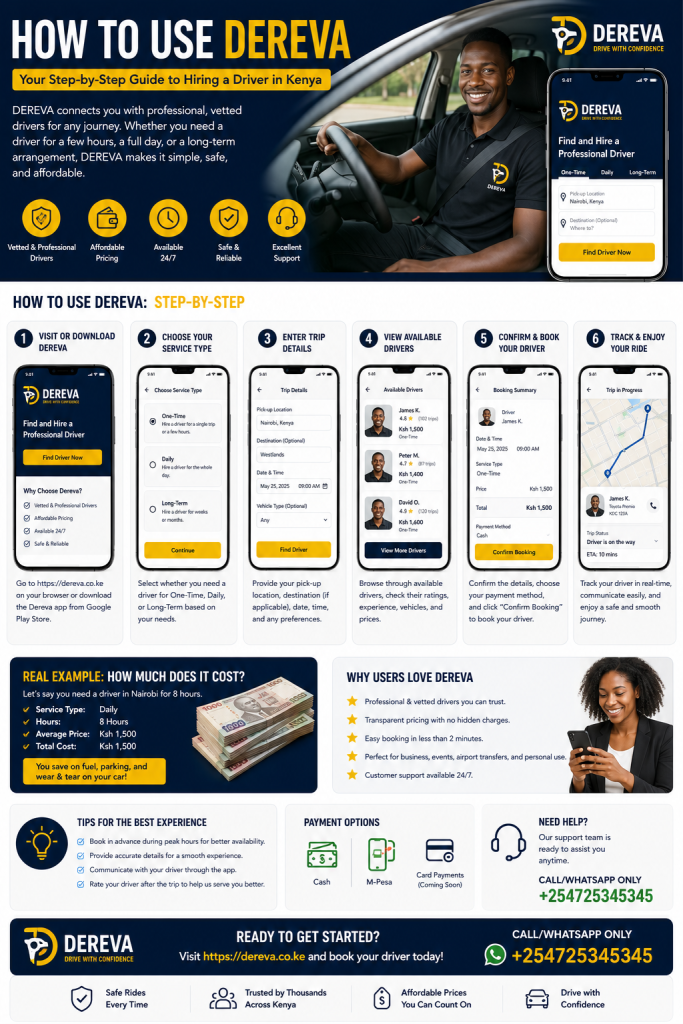
Step 1: Accessing the Dereva Platform
The first step in how to use dereva is accessing the official platform at https://dereva.co.ke
. Users can typically begin either through a mobile browser or a dedicated app interface depending on updates and deployment.
Once inside the platform, you are introduced to a simple dashboard where driver categories, availability, and service types are displayed. The interface is designed to reduce complexity so even first-time users can navigate easily.
Most users spend less than five minutes understanding the layout before proceeding to search for a driver.
Step 2: Creating Your Account
The second step in how to use dereva is account registration. Users are required to provide basic identification details such as name, phone number, and location. This ensures secure transactions and verified communication between clients and drivers.
Verification is important because it helps reduce fraud cases and ensures accountability. Many similar informal driver-hiring systems in Kenya lack structured identity verification, which often leads to disputes or unreliable service delivery.
By contrast, Dereva uses a controlled onboarding process that increases trust between both parties.
Step 3: Searching for a Suitable Driver
Once registered, the next stage in how to use dereva is searching for a driver that matches your needs. Users can filter drivers based on:
Experience level
Vehicle type familiarity
Availability
Location proximity
Short-term or long-term engagement
For example, if a small business needs a delivery driver in Nairobi CBD for 5 hours daily, the platform allows filtering based on hourly availability.
In traditional hiring, such a setup would require negotiating daily rates averaging KES 1,500 to KES 3,000 per day, depending on experience. With Dereva, pricing is standardized and more predictable.
Step 4: Booking a Driver
After selecting a driver, the next step in how to use dereva is making a booking request. This involves selecting the duration of service, specifying the job type, and confirming availability.
For instance, if a user books a driver for 4 days of business errands at an average rate of KES 2,000 per day, the total cost would be KES 8,000. This is significantly cheaper than maintaining a full-time driver salary structure that would exceed KES 30,000 per month.
This flexibility is one of the strongest advantages of learning how to use dereva effectively.
Step 5: Confirming Payment and Terms
Payment confirmation is another important step in how to use dereva. Users are required to confirm service terms before booking is finalized. This ensures both parties understand expectations, working hours, and payment structure.
Most digital transport platforms in Kenya now integrate mobile payment systems such as M-Pesa, making transactions fast and traceable. This reduces cash-handling risks and improves transparency.
For users, this means better financial control since every transaction is recorded and can be tracked for budgeting or business accounting purposes.
Step 6: Working With the Driver
Once booking is confirmed, the final step in how to use dereva is working with the assigned driver. Communication is typically handled through the platform or direct contact details provided after confirmation.
At this stage, users are encouraged to clearly outline expectations such as:
Pickup and drop-off schedules
Work routes
Fuel responsibility
Waiting time policies
Safety instructions
Clear communication helps avoid misunderstandings and ensures smooth service delivery.
Real-Life Cost Example of Using Dereva
To understand how to use dereva practically, consider this example:
A small business in Nairobi requires a driver for deliveries three times a week. Each working day costs approximately KES 2,000.
Weekly cost: KES 2,000 × 3 = KES 6,000
Monthly cost (4 weeks): KES 6,000 × 4 = KES 24,000
In comparison, hiring a full-time driver may cost:
Salary: KES 30,000
NHIF/NSSF obligations: KES 3,000–5,000
Additional allowances: KES 2,000–5,000
Total: KES 35,000–40,000+ per month
This comparison shows why understanding how to use dereva can significantly reduce transport-related costs for SMEs and individuals.
Benefits of Learning How to Use Dereva
There are several benefits associated with mastering how to use dereva correctly.
First, it provides flexibility in transport planning. Users are not tied to long-term employment contracts.
Second, it reduces operational costs, especially for businesses that do not require full-time drivers.
Third, it improves access to professional drivers without the hassle of recruitment and HR management.
Fourth, it allows scalability. Businesses can hire more drivers during peak seasons and reduce usage during low-demand periods.
Advanced Ways to Understand How to Use Dereva for Business Operations
Once you understand the basic flow of how to use dereva, the next step is learning how businesses can integrate the platform into daily operations. Many SMEs in Kenya are now replacing fixed transport staff with flexible driver access systems because operational demand fluctuates throughout the month.
For example, a logistics startup in Nairobi may require 1–2 drivers during weekdays but none on weekends. Instead of paying a fixed salary of around KES 30,000–45,000 monthly per driver, the business can instead scale usage through Dereva depending on actual demand. This is where how to use dereva becomes a cost-control strategy rather than just a booking process.
Understanding scheduling patterns is key. Businesses that plan weekly deliveries, client visits, or procurement runs can pre-book drivers in advance. This avoids last-minute pricing fluctuations and ensures availability during peak working hours.
How Pricing Works When Learning How to Use Dereva
A key part of how to use dereva effectively is understanding pricing structure. Unlike traditional employment where costs are fixed, Dereva uses flexible pricing depending on duration, distance, and type of assignment.
For example:
Half-day driver booking: approximately KES 1,500 – KES 2,500
Full-day booking: approximately KES 2,000 – KES 3,500
Long-distance assignments: negotiated based on kilometers and hours
A small business running deliveries 10 days per month at an average of KES 2,200 per day would spend:
KES 2,200 × 10 = KES 22,000 monthly
This is significantly lower than maintaining a permanent driver, which can exceed KES 35,000 per month when allowances and statutory deductions are included.
This cost advantage is one of the strongest reasons users research how to use dereva in the first place.
How to Use Dereva for Personal Transport Needs
Beyond business use, many individuals also want to understand how to use dereva for personal transport needs. This includes airport transfers, weekend travel, family errands, and event transportation.
For example, a user traveling from Nairobi to Naivasha for a weekend trip might hire a driver for two days. If each day costs around KES 2,500, the total becomes:
KES 2,500 × 2 = KES 5,000
This is often cheaper and more convenient than hiring a taxi for multiple round trips or using ride-hailing services repeatedly.
Families also use Dereva for special occasions such as weddings, funerals, or corporate events where consistent transport availability is required throughout the day.
How to Use Dereva Safely and Professionally
Safety is a major part of how to use dereva, especially when dealing with transport services involving unfamiliar drivers.
Users are encouraged to:
Verify driver identity before starting a trip
Confirm booking details in advance
Share trip details with a trusted contact
Follow platform communication channels
Avoid offline negotiations that bypass platform systems
Professional platforms like Dereva help reduce risks by pre-verifying drivers, but user caution is still important.
In Kenya’s transport sector, informal hiring often leads to disputes involving unclear pricing, fuel responsibility, or time overruns. Using structured booking systems reduces these risks significantly.
Common Mistakes People Make When Learning How to Use Dereva
Many first-time users misunderstand how to use dereva and make avoidable mistakes.
One common mistake is booking without clearly defining the job scope. For example, hiring a driver for “a full day” without specifying routes or waiting time can lead to confusion and extra charges.
Another mistake is last-minute booking during peak hours. Just like ride-hailing apps, driver availability can reduce during rush hours, weekends, or holidays. Early planning ensures better pricing and availability.
Some users also forget to compare driver experience levels. For sensitive assignments such as executive transport or long-distance travel, selecting experienced drivers is critical.
How Businesses Can Optimize Costs Using Dereva
Businesses that understand how to use dereva strategically can significantly reduce operational costs.
For instance, a retail company in Nairobi delivering goods 20 times per month at an average of KES 1,800 per trip spends:
KES 1,800 × 20 = KES 36,000 monthly
If the same business employed a full-time driver, total monthly costs could easily exceed KES 40,000–50,000 when accounting for salary, insurance, and allowances.
By shifting to a flexible driver model, businesses only pay for actual usage, improving cash flow and reducing idle labor costs.
This flexibility is especially useful for startups, SMEs, and seasonal businesses.
Integration with Modern Digital Workflows
Modern businesses increasingly integrate transport planning into digital operations. Understanding how to use dereva allows companies to align driver availability with logistics systems, delivery schedules, and customer commitments.
For example, an e-commerce business can plan deliveries based on order volume and assign drivers dynamically instead of maintaining a fixed fleet. This improves efficiency and reduces wasteful spending on underutilized transport resources.
As Kenya’s digital economy grows, platforms like Dereva are becoming part of broader workforce-on-demand systems.
Internal Links for Platform Navigation
Users learning how to use dereva can also explore:
These resources help users understand broader transport systems beyond just learning how to use dereva.
How to Use Dereva: Powerful Step-by-Step Guide to Booking Drivers in Kenya (Part 3)
Risks You Should Understand When Learning How to Use Dereva
Even though how to use dereva is designed to be simple and efficient, users still need to understand potential risks that come with any driver-hiring platform.
One common risk is miscommunication between the client and the driver. If the job scope is not clearly defined—such as working hours, waiting time, fuel responsibility, or route expectations—disputes may arise during or after the trip. This is especially common in informal transport arrangements, but can still occur in digital platforms if instructions are unclear.
Another risk involves availability during peak demand periods. When many users are booking drivers at the same time, such as holidays or month-end travel seasons, driver supply may be limited. This can lead to higher pricing or delayed confirmations. Understanding how to use dereva properly means planning ahead rather than relying on last-minute bookings.
There is also the risk of selecting an inexperienced driver for specialized tasks. For example, executive transport, long-distance travel, or logistics deliveries require drivers with proven experience. Choosing without checking profiles carefully may lead to inefficiencies or delays.
Lastly, digital dependency is also a consideration. Since the platform operates online, users must have stable internet access to make bookings and confirm assignments.
How to Reduce Risks When Using Dereva
The good news is that most risks can be managed easily once you understand how to use dereva correctly.
Clear communication is the most important step. Always specify:
Exact pickup and drop-off points
Working hours and breaks
Route expectations
Payment structure
Any additional responsibilities
Planning ahead also reduces risk. Booking drivers in advance ensures better availability and reduces the chance of inflated last-minute pricing.
Another key strategy is reviewing driver profiles carefully before confirming a booking. Experience level, previous ratings (if available), and suitability for the job should all be considered.
Using official platform communication channels instead of private negotiations also helps maintain transparency and accountability.
Is It Worth Learning How to Use Dereva?
The honest answer is yes, for most users in Kenya’s transport environment.
Understanding how to use dereva provides both financial and operational advantages. For individuals, it reduces the stress of finding reliable drivers for events, travel, or personal errands. For businesses, it offers a flexible cost model that eliminates the need for full-time driver salaries when demand is inconsistent.
Let’s consider a simple comparison:
A company hiring one full-time driver may spend:
Salary: KES 30,000
Allowances: KES 5,000
Additional costs: KES 3,000–5,000
Total: KES 38,000–40,000 monthly
With Dereva, the same company using a driver 12 days per month at KES 2,200 per day spends:
KES 2,200 × 12 = KES 26,400 monthly
This creates a monthly saving of over KES 10,000–13,000, which can be reinvested into operations, marketing, or expansion.
However, Dereva is not ideal for businesses that require a driver every single day without interruption. In such cases, full-time employment may still be more practical.
Final FAQ on How to Use Dereva
1. What is the easiest way to understand how to use dereva?
The easiest way is to follow four steps: register, search for a driver, book the service, and confirm payment. The platform is designed for simple navigation even for first-time users.
2. Can I use Dereva for business deliveries?
Yes. Many SMEs use Dereva for deliveries, logistics support, and client transport. It is especially useful for businesses with fluctuating transport needs.
3. How much does it cost to use Dereva?
Costs vary depending on duration and type of service. On average, users spend between KES 1,500 and KES 3,500 per day, depending on assignment requirements.
4. Is Dereva safer than hiring drivers informally?
Yes, because drivers are typically verified through the platform. However, users still need to follow safety practices such as confirming identity and using official communication channels.
5. Do I need technical skills to learn how to use dereva?
No. The platform is designed to be user-friendly, and most users can complete bookings in a few minutes without technical experience.
Final Verdict: How to Use Dereva Effectively
Mastering how to use dereva is ultimately about understanding convenience, flexibility, and cost efficiency. The platform is designed to replace the traditional stress of driver hiring with a structured, on-demand system.
For individuals, it simplifies travel logistics. For businesses, it introduces a scalable transport solution that aligns with real operational needs rather than fixed payroll structures.
The key to success is using the platform strategically—planning ahead, communicating clearly, and selecting the right driver for each task.
Final Call to Action
If you are ready to simplify your transport needs and start using professional drivers on demand, visit:
Company Driver Jobs Kenya: The Complete Guide to Finding Professional Driving Opportunities The demand for Company Driver Jobs Kenya continues to grow as businesses...
Heavy Commercial Driver Kenya: The Complete Guide to Hiring Skilled Commercial Vehicle Drivers Kenya's transport, logistics, construction, manufacturing, and distribution industries rely heavily on...
Professional Driver Kenya: The Complete Guide to Hiring Skilled and Reliable Drivers Whether you need a driver for your business, family, logistics company, school,...