Back to blog
Dereva Blog 29 June 2026 15 min read

Commercial Vehicle Tracking Kenya: The Complete Guide to Smarter Fleet Management, Cost Reduction, and Business Growth

Commercial Vehicle Tracking Kenya: The Complete Guide to Smarter Fleet Management, Better Driver Performance, and Efficient Business Operations Modern businesses depend heavily on transportation. Whether delivering products, transporting staff, moving equipment, or providing essential services, commercial vehicles have become one of the...

By Dereva Team Published 29 June 2026
Dereva Team

Commercial Vehicle Tracking Kenya: The Complete Guide to Smarter...

SEO-friendly content designed to build trust and stronger driver discovery across Kenya.
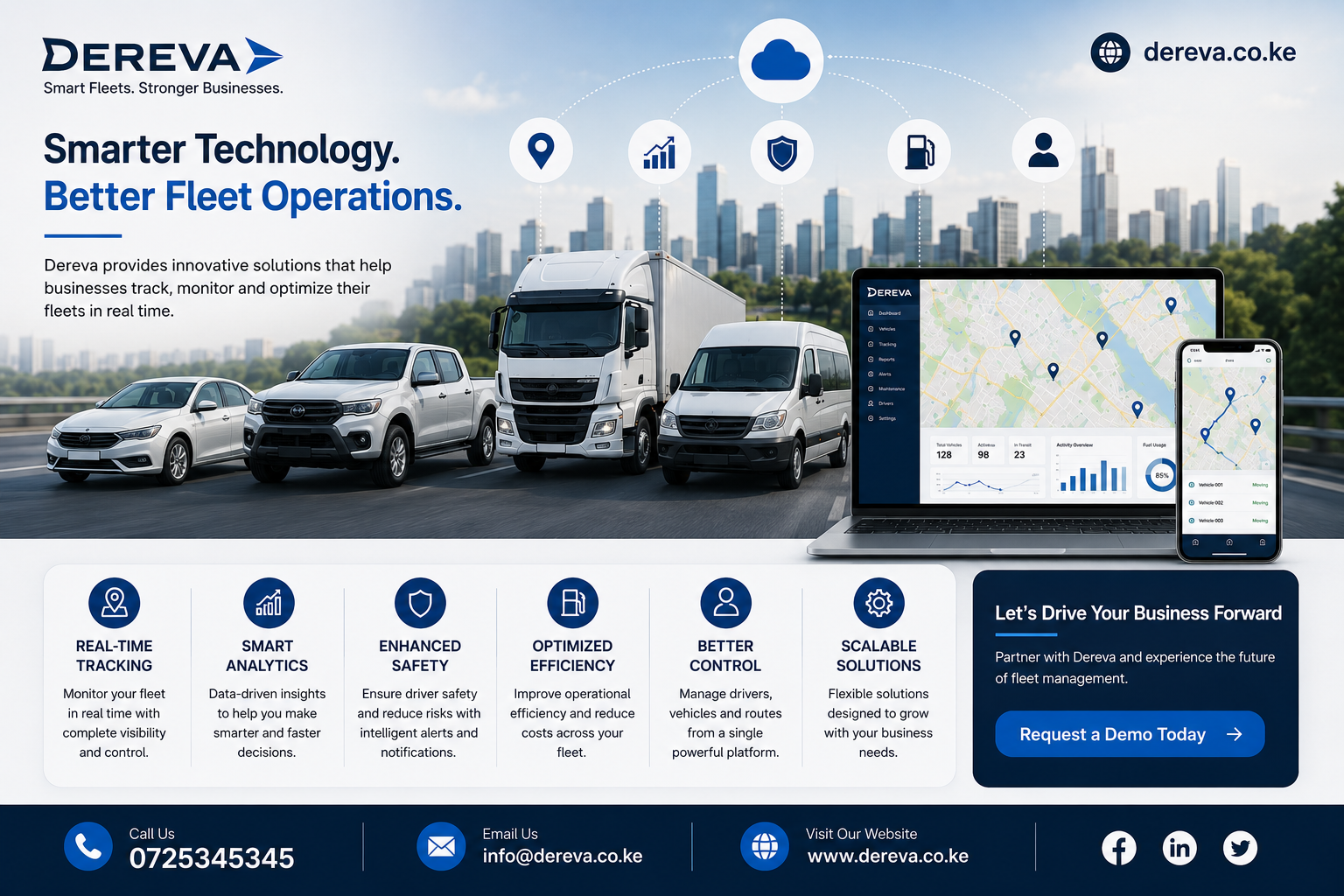
Commercial Vehicle Tracking Kenya

Table of Contents

Commercial Vehicle Tracking Kenya: The Complete Guide to Smarter Fleet Management, Better Driver Performance, and Efficient Business Operations

Modern businesses depend heavily on transportation. Whether delivering products, transporting staff, moving equipment, or providing essential services, commercial vehicles have become one of the most valuable business assets. As organizations expand across Kenya, managing these vehicles efficiently becomes increasingly complex. Businesses must deal with rising fuel prices, maintenance costs, driver accountability, customer expectations, vehicle security, and operational efficiency—all while remaining competitive in a fast-moving economy.

This is where Commercial Vehicle Tracking Kenya becomes indispensable. More than just a tool for locating vehicles, modern fleet tracking solutions provide businesses with comprehensive insights into every aspect of fleet performance. From real-time GPS tracking and route optimization to driver behavior monitoring, fuel management, maintenance scheduling, and detailed reporting, vehicle tracking empowers businesses to make informed decisions that improve productivity and reduce costs.

Whether you operate a fleet of delivery vans, cargo trucks, buses, service vehicles, construction equipment, or utility vehicles, adopting advanced tracking technology can transform the way your business operates. By combining intelligent fleet monitoring with professional driver recruitment through Dereva, businesses can strengthen both operational efficiency and workforce quality.

This comprehensive guide explores everything businesses need to know about Commercial Vehicle Tracking Kenya, its benefits, applications, essential features, and how it contributes to sustainable business growth.


Understanding Commercial Vehicle Tracking Kenya

Before exploring its benefits, it is important to understand what commercial vehicle tracking actually involves.

Commercial vehicle tracking refers to the use of GPS technology, telecommunications, cloud computing, and fleet management software to monitor commercial vehicles in real time. Every equipped vehicle continuously transmits information to a centralized management platform where fleet managers can monitor operations from virtually anywhere.

Unlike traditional vehicle security systems that simply indicate a vehicle’s location, modern tracking platforms generate valuable operational intelligence.

Businesses gain access to information such as:

  • Vehicle location
  • Current route
  • Distance travelled
  • Driver behavior
  • Speed monitoring
  • Engine status
  • Idle time
  • Fuel usage patterns
  • Vehicle utilization
  • Maintenance schedules
  • Historical trip records
  • Arrival and departure times

This information enables businesses to replace assumptions with data-driven decisions.


Why Commercial Vehicle Tracking Kenya Has Become Essential

The transport industry in Kenya continues to evolve rapidly. Businesses face increasing pressure to deliver products faster, reduce operating costs, improve customer satisfaction, and maintain higher safety standards.

Without proper fleet visibility, organizations often struggle with issues including:

  • Unauthorized vehicle use
  • Excessive fuel consumption
  • Poor route planning
  • Driver misconduct
  • Delayed deliveries
  • Vehicle theft
  • Missed maintenance schedules
  • Reduced productivity
  • Customer complaints
  • High operational costs

Commercial Vehicle Tracking Kenya addresses these challenges by providing businesses with complete oversight of fleet activities.

Instead of reacting to problems after they occur, managers can monitor fleet performance in real time and respond proactively.


The Evolution of Fleet Management in Kenya

Fleet management has changed dramatically over the last decade.

Previously, fleet managers depended on:

  • Phone calls
  • Paper logbooks
  • Driver reports
  • Manual fuel records
  • Physical inspections

While these methods worked to some extent, they left significant gaps in accountability and operational visibility.

Today’s digital fleet management solutions integrate:

  • GPS tracking
  • Cloud software
  • Mobile applications
  • Driver analytics
  • Automated reporting
  • Maintenance scheduling
  • Fuel monitoring
  • Digital records
  • Geofencing
  • Real-time alerts

These innovations have transformed fleet operations from manual administration into intelligent business management.


How Commercial Vehicle Tracking Kenya

Understanding how tracking technology operates helps businesses appreciate its full value.

GPS Devices Installed in Vehicles

Each commercial vehicle is equipped with a GPS tracking device.

This device continuously records:

  • Geographic location
  • Speed
  • Direction
  • Engine status
  • Travel history

The device communicates with secure cloud servers using mobile data networks.


Centralized Fleet Management Platform

Information from every vehicle is transmitted to a centralized dashboard.

Fleet managers can instantly view:

  • Live vehicle positions
  • Routes
  • Driver activity
  • Fleet utilization
  • Alerts
  • Operational reports

This centralized visibility improves decision-making across the entire organization.


Mobile Access Anywhere

Modern tracking systems are cloud-based.

Managers can access fleet information from:

  • Office computers
  • Laptops
  • Tablets
  • Smartphones

This flexibility allows businesses to manage operations regardless of location.


The Business Value of Fleet Visibility

Visibility is one of the most important advantages of Commercial Vehicle Tracking Kenya.

Without visibility, businesses cannot effectively manage transport operations.

With complete fleet visibility, organizations know:

  • Which vehicles are active
  • Which drivers are available
  • Which deliveries are complete
  • Which customers require attention
  • Which vehicles require maintenance
  • Which routes are performing efficiently

Better visibility naturally leads to better business decisions.


Reducing Fuel Costs Through Smart Fleet Tracking

Fuel represents one of the largest operating expenses for commercial fleets.

Even small inefficiencies accumulate into substantial annual losses.

Vehicle tracking helps reduce fuel costs by identifying:

Excessive Idling

Engines left running unnecessarily consume fuel without generating value.

Fleet reports highlight excessive idle times so managers can address poor habits.


Unauthorized Trips

Some commercial vehicles are occasionally used outside official working hours.

Tracking systems identify:

  • Weekend usage
  • After-hours movement
  • Personal trips
  • Route deviations

Reducing unauthorized use immediately lowers fuel expenses.


Inefficient Routes

Drivers sometimes choose longer routes due to habit or convenience.

Route optimization ensures vehicles travel the shortest practical distance.

Benefits include:

  • Reduced fuel consumption
  • Faster deliveries
  • Lower mileage
  • Reduced wear and tear

Aggressive Driving

Driving behavior directly affects fuel economy.

Tracking software identifies:

  • Rapid acceleration
  • Harsh braking
  • Speeding
  • Sudden cornering

Improving driver behavior often produces measurable fuel savings.


Improving Driver Accountability

Drivers are among the most valuable assets in transport operations.

However, without accurate performance data, evaluating driver productivity becomes difficult.

Commercial vehicle tracking introduces transparency into daily operations.

Managers can review:

  • Daily routes
  • Working hours
  • Delivery completion
  • Average speeds
  • Driving habits
  • Customer visits
  • Stop durations
  • Idle periods

Objective performance data creates fair evaluations while encouraging professional driving standards.


Driver Behaviour Monitoring

Modern fleet systems continuously monitor driving habits.

Important indicators include:

Speed Compliance

Managers receive alerts whenever drivers exceed speed limits.

Reducing speeding improves:

  • Road safety
  • Fuel efficiency
  • Vehicle lifespan
  • Insurance risk

Harsh Braking

Frequent harsh braking may indicate:

  • Distracted driving
  • Poor anticipation
  • Unsafe following distances

Early identification enables corrective driver coaching.


Rapid Acceleration

Aggressive acceleration:

  • Wastes fuel
  • Increases maintenance costs
  • Accelerates tire wear
  • Places additional stress on engines

Tracking reports make these patterns easy to identify.


Excessive Cornering

Unsafe cornering increases accident risk while damaging vehicle components.

Monitoring these behaviors improves overall fleet safety.


Increasing Vehicle Security

Commercial vehicles often transport valuable cargo, expensive equipment, and important customer deliveries.

Vehicle theft remains a concern across many industries.

Commercial vehicle tracking improves security through:

Live GPS Location

Businesses know the precise location of every vehicle at all times.


Geofencing

Managers create virtual boundaries around:

  • Warehouses
  • Customer premises
  • Distribution centers
  • Construction sites
  • Operational regions

Automatic alerts are generated whenever vehicles enter or leave designated areas.


Theft Recovery Support

Should a vehicle be stolen, GPS tracking significantly improves recovery efforts by providing accurate location information to relevant authorities.


Unauthorized Movement Alerts

If vehicles move outside approved schedules, businesses receive immediate notifications.

This rapid response capability minimizes security risks.


Better Customer Service Through Fleet Tracking

Today’s customers expect accurate delivery information and timely communication.

Commercial tracking systems improve customer experience by enabling businesses to provide:

  • Accurate delivery estimates
  • Faster dispatching
  • Real-time vehicle status
  • Reduced delivery delays
  • Improved communication
  • Faster emergency response

Satisfied customers often become repeat customers, contributing directly to business growth.


Optimizing Delivery Operations

Delivery businesses face constant pressure to maximize efficiency.

Tracking systems assist by:

  • Assigning the nearest available vehicle
  • Reducing empty return trips
  • Monitoring delivery completion
  • Improving route planning
  • Balancing workloads across drivers

These improvements increase daily delivery capacity without expanding fleet size.


Fleet Utilization: Getting More from Existing Vehicles

Many businesses assume they need additional vehicles when demand increases.

However, tracking data often reveals underutilized assets.

Fleet utilization reports help identify:

  • Vehicles with low daily usage
  • Idle assets
  • Overworked vehicles
  • Uneven route distribution
  • Capacity gaps

Balancing vehicle utilization extends fleet lifespan while delaying unnecessary capital investment.


Supporting Business Growth with Smarter Fleet Management

As businesses expand into new towns, counties, and regions across Kenya, fleet complexity increases. Managing five vehicles is very different from managing fifty or hundreds of commercial vehicles. Without reliable systems in place, growth can quickly lead to inefficiencies, rising costs, communication challenges, and reduced customer satisfaction.

Commercial Vehicle Tracking Kenya provides the operational foundation businesses need to scale confidently. Instead of relying on manual coordination, fleet managers gain access to centralized data that supports informed planning, faster decision-making, and improved operational control.

Whether a business is opening new distribution routes, increasing delivery volumes, or expanding field service operations, commercial vehicle tracking helps maintain consistency and accountability across the fleet.


Fleet Maintenance Management Made Easier

One of the most overlooked advantages of Commercial Vehicle Tracking Kenya is its ability to improve fleet maintenance planning. While many businesses initially invest in GPS tracking for security or vehicle visibility, they soon discover that maintenance management is equally valuable.

Commercial vehicles experience significant wear and tear as they travel long distances, carry heavy loads, and operate under varying road conditions across Kenya. Without a structured maintenance schedule, small mechanical issues can quickly develop into major repairs that lead to expensive downtime and lost productivity.

Modern fleet tracking systems help businesses move from reactive maintenance to preventive maintenance, ensuring vehicles remain roadworthy and efficient.


Why Preventive Maintenance Matters

Preventive maintenance focuses on servicing vehicles before problems occur rather than waiting for breakdowns.

The advantages include:

  • Reduced repair costs
  • Improved fuel efficiency
  • Increased vehicle lifespan
  • Better road safety
  • Higher fleet availability
  • Reduced downtime
  • Improved customer satisfaction

A vehicle that spends less time in the garage spends more time generating revenue.


Automated Maintenance Reminders

Fleet management software can automatically remind managers when a vehicle requires servicing based on:

  • Mileage
  • Engine hours
  • Calendar dates
  • Manufacturer recommendations
  • Vehicle usage patterns

Instead of relying on manual records, businesses receive timely notifications that simplify maintenance planning.


Monitoring Vehicle Health

Many advanced commercial vehicle tracking solutions integrate with onboard diagnostics to monitor vehicle health indicators.

Businesses may track:

  • Engine performance
  • Battery condition
  • Cooling system alerts
  • Oil service intervals
  • Fault codes
  • Brake performance
  • Transmission issues

Early identification of mechanical concerns helps prevent unexpected breakdowns.


Improving Fleet Productivity

Every commercial vehicle should contribute maximum value to the business.

Fleet productivity involves ensuring vehicles spend more time serving customers and less time sitting idle.

Tracking systems improve productivity by helping managers understand:

  • Vehicle utilization rates
  • Driver availability
  • Route efficiency
  • Daily workload
  • Delivery completion times
  • Average trip duration

These insights make scheduling more effective.


Eliminating Unnecessary Downtime

Vehicle downtime affects every aspect of business operations.

Common causes include:

  • Mechanical failures
  • Poor scheduling
  • Fuel shortages
  • Driver delays
  • Traffic congestion
  • Route planning errors

With real-time tracking and predictive maintenance, many of these issues can be minimized before they disrupt operations.


Route Optimization for Better Efficiency

Choosing the shortest route is not always the fastest or most cost-effective option.

Modern tracking systems analyze:

  • Road conditions
  • Traffic congestion
  • Distance
  • Delivery priorities
  • Vehicle capacity
  • Driver schedules

Optimized routing offers several advantages.

Lower Fuel Consumption

Shorter, more efficient routes reduce fuel usage significantly over time.

Faster Deliveries

Customers receive products sooner, improving satisfaction and loyalty.

Increased Daily Deliveries

Drivers complete more assignments within normal working hours.

Reduced Vehicle Wear

Efficient routing reduces unnecessary mileage, helping vehicles remain in better condition for longer.


Enhancing Driver Safety

Drivers are at the heart of every transport operation. Protecting them is not only a legal and ethical responsibility but also a smart business decision.

Commercial vehicle tracking contributes to safer roads by encouraging responsible driving habits.


Monitoring Driving Behaviour

Tracking systems identify behaviours such as:

  • Speeding
  • Harsh braking
  • Rapid acceleration
  • Aggressive cornering
  • Excessive idling
  • Long driving hours

Managers can use this information to provide constructive coaching rather than relying on assumptions.


Driver Scorecards

Many fleet platforms generate performance scorecards based on measurable indicators.

These reports help businesses:

  • Recognize high-performing drivers
  • Identify coaching opportunities
  • Encourage healthy competition
  • Reward safe driving
  • Improve accountability

A data-driven approach supports continuous improvement across the fleet.


Supporting Compliance and Operational Standards

Businesses that operate commercial fleets often need to maintain accurate operational records.

Vehicle tracking systems simplify documentation by automatically recording:

  • Trip histories
  • Mileage
  • Working hours
  • Vehicle usage
  • Route information
  • Stop durations

Automated records reduce paperwork and improve reporting accuracy.


Commercial Vehicle Tracking Across Different Industries

One of the reasons Commercial Vehicle Tracking Kenya is widely adopted is its flexibility. Businesses from nearly every sector can benefit from improved fleet visibility and operational control.

Logistics and Transport Companies

Logistics providers rely on efficient movement of goods. Tracking systems help dispatch teams monitor deliveries, optimize routes, reduce delays, and communicate accurate arrival times to customers.

Courier and Parcel Delivery Services

Courier companies benefit from:

  • Faster dispatch
  • Proof of route completion
  • Better driver accountability
  • Efficient customer communication
  • Improved delivery planning

Construction Companies

Construction businesses often move machinery, equipment, materials, and personnel between multiple sites.

Tracking supports:

  • Equipment movement monitoring
  • Site logistics
  • Fuel management
  • Driver scheduling
  • Asset protection

Retail and Distribution Businesses

Retail distributors require dependable transport to maintain inventory levels across multiple locations.

Fleet tracking improves:

  • Delivery scheduling
  • Warehouse coordination
  • Inventory movement
  • Customer service

Utility and Field Service Companies

Organizations providing maintenance, installations, inspections, or emergency response services can dispatch the nearest available vehicle, reducing response times and increasing productivity.

School Transport Providers

School transport operators can monitor buses in real time, helping improve safety, route adherence, and communication with parents and administrators.

Healthcare and Medical Logistics

Hospitals, laboratories, and pharmaceutical distributors rely on timely transport of medical supplies and equipment. Tracking supports dependable logistics while reducing delays.


Using Fleet Data to Make Better Business Decisions

Every journey generates valuable information. Businesses that analyse this data can continuously improve operations.

Useful fleet reports include:

  • Daily mileage
  • Monthly fuel trends
  • Vehicle utilization
  • Driver performance
  • Idle time reports
  • Speed reports
  • Maintenance history
  • Route efficiency
  • Delivery completion rates

Rather than relying on assumptions, managers can make evidence-based decisions that improve profitability.


Fleet Analytics and Business Intelligence

Data becomes even more valuable when analysed over time.

Businesses can identify trends such as:

  • Seasonal delivery patterns
  • Fuel consumption changes
  • Frequently delayed routes
  • High-performing drivers
  • Underutilized vehicles
  • Maintenance cost trends

These insights support strategic planning and long-term business growth.


Integrating Commercial Vehicle Tracking with Business Operations

Modern fleet management does not operate in isolation. Many organizations integrate tracking systems with other business functions to create a more connected operation.

Examples include:

  • Dispatch management
  • Customer service
  • Payroll
  • Asset management
  • Maintenance scheduling
  • Financial reporting
  • Inventory management
  • Delivery confirmation systems

This integration reduces manual work while improving operational efficiency.


The Future of Commercial Vehicle Tracking Kenya

Technology continues to transform fleet management. Businesses adopting tracking solutions today are better prepared for future innovations.

Emerging developments include:

Artificial Intelligence

AI can analyse driving patterns, predict maintenance requirements, and recommend operational improvements.

Predictive Maintenance

Instead of waiting for components to fail, predictive systems use vehicle data to forecast maintenance needs before breakdowns occur.

Advanced Fuel Analytics

Businesses will gain even deeper insights into fuel efficiency, consumption trends, and opportunities to reduce operating costs.

Smarter Route Planning

Future systems will continue to improve route optimization using live traffic information, historical travel data, and predictive analytics.

Enhanced Mobile Fleet Management

Fleet managers will increasingly manage operations directly from smartphones and tablets, enabling faster decision-making wherever they are.


Building a Stronger Fleet Through Better Drivers

Technology alone cannot guarantee successful fleet operations. Skilled, responsible, and experienced drivers remain essential.

Businesses benefit when they combine vehicle tracking with professional driver recruitment, ongoing training, and performance management.

Reliable drivers contribute to:

  • Safer journeys
  • Better fuel economy
  • Improved customer experiences
  • Lower accident rates
  • Reduced maintenance costs
  • Higher operational efficiency

Why Businesses Choose Dereva

While Commercial Vehicle Tracking Kenya gives businesses greater visibility over their vehicles, successful fleet operations also depend on having qualified drivers behind the wheel.

Dereva connects businesses across Kenya with experienced and verified professional drivers for commercial fleets, logistics companies, transport operators, corporate organizations, delivery services, and field operations.

By simplifying driver recruitment, Dereva helps organizations:

  • Reduce hiring time
  • Access qualified commercial drivers
  • Strengthen fleet operations
  • Improve workforce reliability
  • Support business growth

Whether your fleet consists of a handful of service vehicles or hundreds of trucks operating nationwide, having skilled drivers alongside effective fleet management practices creates a strong foundation for long-term success.


Best Practices for Successful Commercial Vehicle Tracking Kenya

To maximize the value of your investment:

  • Establish clear fleet policies.
  • Train drivers on responsible vehicle use.
  • Monitor reports regularly rather than occasionally.
  • Use analytics to improve operational planning.
  • Schedule preventive maintenance consistently.
  • Review route performance frequently.
  • Reward safe and efficient drivers.
  • Continuously evaluate fleet performance against business goals.

Fleet tracking delivers the greatest value when it becomes part of everyday business management rather than simply a tool used during emergencies.


Conclusion

As businesses across Kenya continue to expand, transportation remains one of the most critical components of operational success. Managing commercial vehicles efficiently requires more than knowing where they are—it requires visibility into driver behaviour, fuel consumption, maintenance schedules, route performance, vehicle utilization, and overall operational efficiency.

Commercial Vehicle Tracking Kenya provides businesses with the information needed to reduce costs, improve safety, strengthen customer service, and make smarter decisions based on real-time data. Whether you operate in logistics, distribution, construction, retail, healthcare, field services, or corporate transport, investing in intelligent fleet management can deliver measurable long-term value.

By combining advanced fleet management practices with access to qualified professional drivers through Dereva, businesses can create safer, more efficient, and more productive transport operations that are well positioned for sustainable growth in an increasingly competitive marketplace.


Frequently Asked Questions (FAQs)

What is Commercial Vehicle Tracking Kenya?

Commercial vehicle tracking uses GPS technology and fleet management software to monitor the location, movement, performance, and operational status of business vehicles in real time.

Why is Commercial Vehicle Tracking important in Kenya?

It helps businesses improve fleet visibility, reduce fuel costs, increase driver accountability, strengthen vehicle security, improve maintenance planning, and enhance customer service.

Which businesses benefit from Commercial Vehicle Tracking Kenya?

Logistics companies, courier services, retailers, distributors, construction firms, utility providers, healthcare organizations, school transport operators, and businesses with field service vehicles all benefit from commercial vehicle tracking.

Can Commercial Vehicle Tracking reduce fuel expenses?

Yes. Tracking systems identify excessive idling, inefficient routes, speeding, aggressive driving, and unauthorized vehicle use, all of which contribute to unnecessary fuel consumption.

Does vehicle tracking improve driver safety?

Yes. Businesses can monitor speeding, harsh braking, rapid acceleration, excessive idling, and other driving behaviours, helping promote safer and more responsible driving habits.

How does fleet tracking improve maintenance?

Fleet tracking systems generate maintenance reminders based on mileage, engine hours, or service schedules, helping businesses prevent costly breakdowns and extend vehicle lifespan.

Is Commercial Vehicle Tracking suitable for small businesses?

Absolutely. Even businesses operating a small fleet can benefit from improved efficiency, lower operating costs, better scheduling, and enhanced customer service.

How does Dereva support commercial fleet operators?

Dereva helps businesses across Kenya recruit experienced, professional commercial drivers more efficiently. By connecting employers with qualified drivers, Dereva complements strong fleet management practices and supports safer, more productive transport operations.

Ready To Act?

Turn this guide into a stronger Dereva shortlist today.

Use Dereva to browse visible driver profiles, compare trust signals, or join as a driver and get discovered across Kenya.